Decoding Payment Flow Patterns in Finnish Mobile Poker Sessions That Tie Bonus Triggers Directly to Responsible Play Alerts
Hugo Carter · Sep 23, 2026
Decoding Payment Flow Patterns in Finnish Mobile Poker Sessions That Tie Bonus Triggers Directly to Responsible Play Alerts
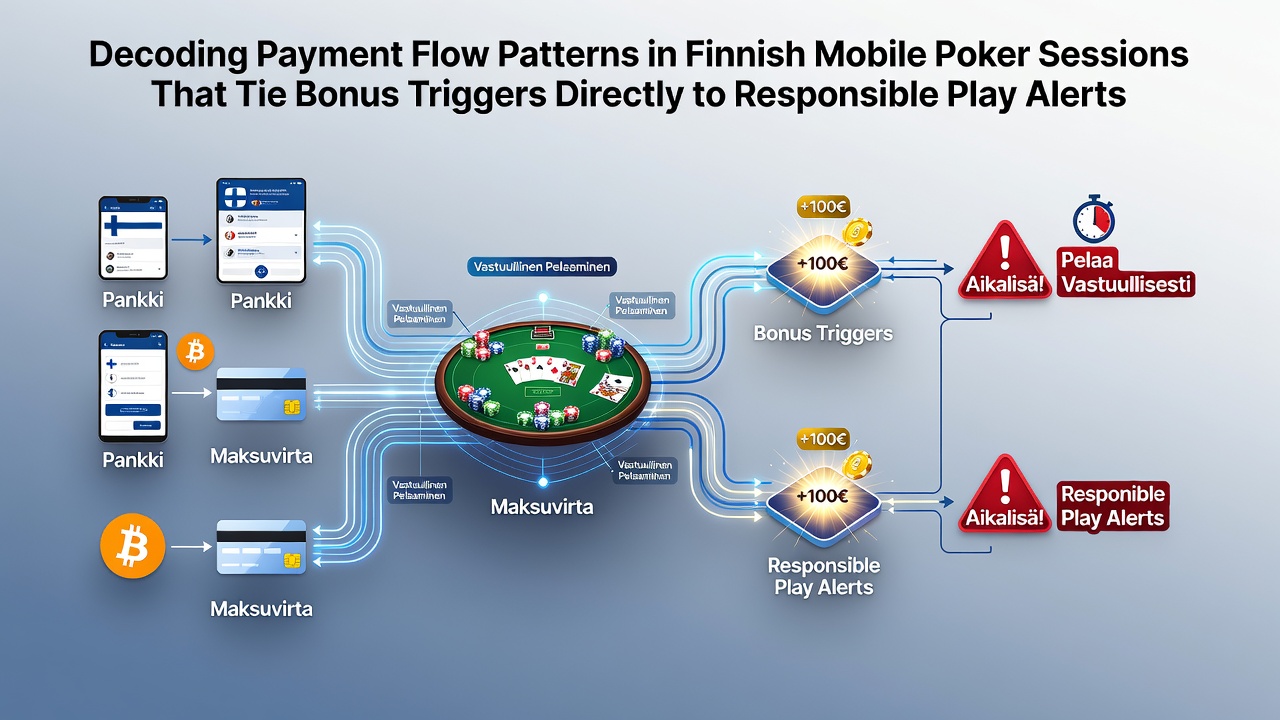
Payment flows in Finnish mobile poker sessions follow structured sequences that connect deposit processing directly to bonus allocation mechanisms, and these sequences often activate responsible play alerts when predefined spending or time thresholds are crossed. Observers note that operators licensed under Finnish regulations route transactions through secure gateways which log each step from initiation to confirmation, creating traceable patterns that link financial activity with behavioral safeguards. Data from recent analyses shows how a standard deposit in a mobile poker app triggers an immediate bonus credit while simultaneously checking against session history to determine if an alert should display.
Core Components of Payment Processing in Mobile Poker
Finnish mobile poker platforms handle payments through a combination of local banking integrations and international processors that comply with national standards, allowing seamless transfers while recording every movement in real time. Researchers have mapped these flows to reveal recurring sequences where a player initiates a deposit, the system verifies identity and balance, and bonus eligibility gets evaluated within seconds. When the deposit meets criteria for promotional offers the bonus activates automatically, yet the same verification layer cross-references play duration and amount to flag potential concerns before the session continues.
Studies indicate that September 2026 marked an update in alert timing across several platforms operating in Finland, with systems now pausing bonus credit until the responsible play notification receives acknowledgment. This adjustment refined the connection between payment confirmation and player protection features without interrupting the core transaction path.
Bonus Triggers and Their Direct Link to Alert Systems
Bonus triggers operate as conditional checkpoints embedded in the payment flow, activating when deposit size, frequency, or cumulative spend aligns with operator-defined parameters. Experts tracking these patterns report that once a bonus unlocks the responsible play module scans the account for indicators such as rapid successive deposits or extended session lengths, and it generates an alert if thresholds appear crossed. The alert typically presents options for setting limits or pausing activity, and the bonus remains available only after the player interacts with the prompt or proceeds without changes.
One documented case from platform data reviews shows how a series of three deposits within an hour triggered both a welcome bonus and an immediate session-limit suggestion, illustrating the integrated design where promotional incentives and safety checks share the same processing pipeline. Such configurations ensure that bonus distribution never bypasses the alert layer entirely.
Observed Patterns Across Finnish Mobile Sessions
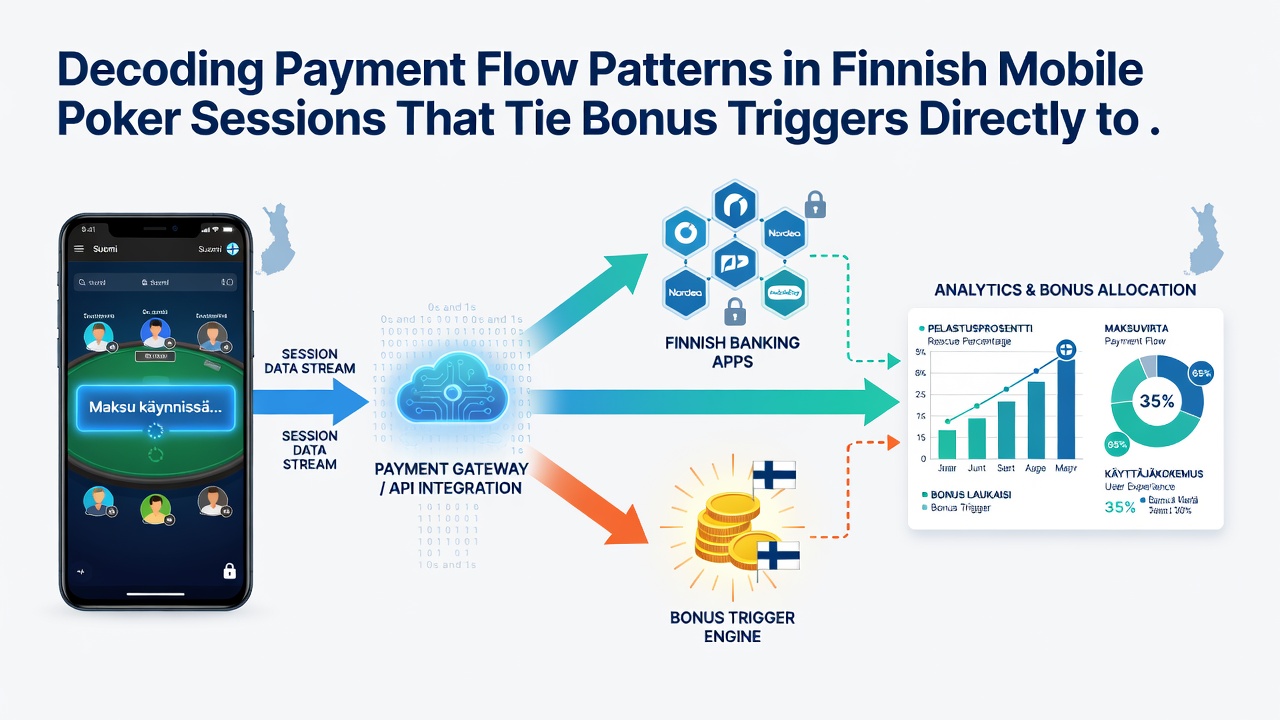
Analysis of aggregated session logs reveals distinct clusters where high-frequency deposits coincide with bonus activations that then prompt alerts at predictable intervals. According to findings published by the Finnish Institute for Health and Welfare, these patterns appear most consistently during evening hours and among accounts with prior limit-setting activity. The data further indicates that alerts triggered through bonus-linked payments receive higher response rates compared with standalone notifications, suggesting the timing within the payment sequence influences player engagement.
Additional patterns show regional variations within Finland, with urban users displaying quicker progression from deposit to bonus to alert acknowledgment than rural counterparts, though overall compliance metrics remain consistent across demographics. Platform operators adjust threshold values periodically to align with evolving usage statistics while maintaining the core linkage between financial triggers and protective interventions.
Regulatory Context and Technical Implementation
Finnish gambling legislation requires that responsible play features integrate with all promotional activities, which explains why payment flows incorporate alert checkpoints at the point of bonus release. Technical implementations rely on API connections between payment processors and gaming engines that exchange real-time data on transaction details and account status. A report from the OECD on digital gambling systems notes similar architectures in other regulated markets, highlighting how Finland's approach emphasizes immediate feedback loops within mobile environments.
Developers achieve this integration by embedding decision trees in the transaction code, where each completed payment evaluates multiple variables before finalizing bonus credit. The result is a continuous monitoring process that ties every bonus event to an evaluation of responsible play status, reducing the chance that promotional benefits reach accounts without corresponding safeguards.
Conclusion
The interplay between payment flows, bonus triggers, and responsible play alerts in Finnish mobile poker sessions demonstrates a tightly coordinated system designed to align commercial features with player protection requirements. Patterns identified through transaction data and regulatory updates continue to shape how these elements connect, particularly following refinements noted in September 2026. Observers tracking ongoing developments see these linkages as central to maintaining compliance within the Finnish market while supporting standard mobile poker operations.